A Calm Departure Morning: A Short-Break Checklist Built Around Sequence
A short-break departure morning checklist keeps documents, travel details and last-minute home checks in order, so you can leave without a frantic search.
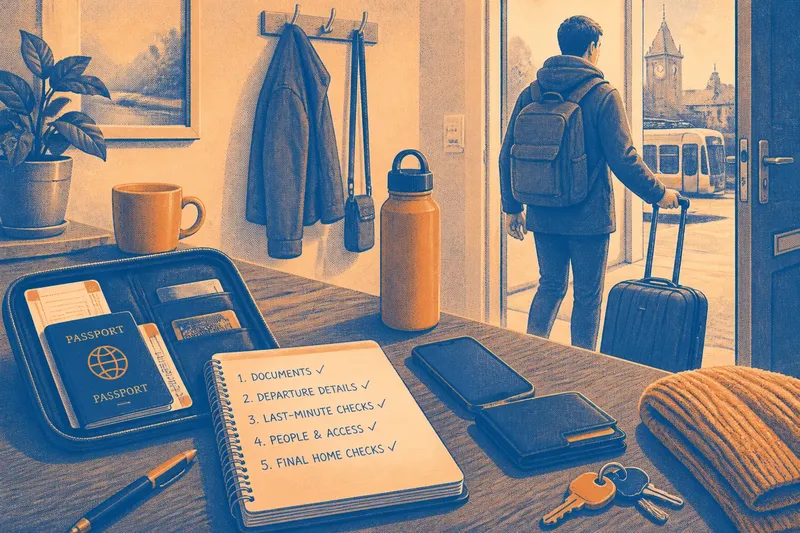
A short-break departure morning checklist works best when it follows the order you will need things, not the order you packed them. Keep your documents and departure details together, deal with the tasks that can delay you next, and leave a final check for the door.
That sequence matters because packing and leaving are different jobs. Your clothes may have been packed the night before; the morning is for confirming you can travel, reach the departure point and close up at home without doubling back.
What belongs on a departure morning checklist?
Separate the list into three groups: essential documents, departure details and last-minute checks. This keeps a passport from being buried among ordinary packing reminders, and stops small household jobs from crowding out the timing of your journey.
- Essential documents: passport or other required identification, booking confirmations, tickets and any documents needed for your plans.
- Departure details: address of the station, airport or meeting point; route there; departure time; and the latest time you need to leave home.
- Last-minute checks: phone and wallet, medication you need that morning, any item still charging, and the agreed checks at home.
- People and access: keys, travel companions, pickup arrangements, and any instructions for someone looking after your home or pet.
Keep general packing on a separate list. “Pack a jumper” can be completed earlier; “put the passport in the travel pouch” belongs on the departure list because it must be confirmed before you leave.
When should I check documents and booking details?
Check them before the departure morning, then confirm that the essentials are with you as you get ready to leave. Look at the current booking information for the correct date, departure point and any instructions that affect arrival, such as a required check-in process.
Store digital confirmations somewhere you can reach without relying on a patchy connection, and keep any paper documents together in a slim folder or travel pouch. If another person is travelling with you, agree who is carrying which document rather than assuming both of you have everything.
For example, say you are taking an early train for a two-night break and have saved the ticket on your phone. The night before, you check the station and departure time in the booking, save the ticket for offline access, and place your ID and bank card in the same pouch; in the morning, you confirm the pouch is in your day bag, rather than reopening every pocket in your suitcase.
How early should I leave for the station or airport?
Work backwards from the departure time using the current guidance from the transport provider and the journey from your door. Include the time needed to reach the correct entrance or platform, deal with parking or a drop-off, and find your way inside; do not treat the scheduled departure as the moment to arrive.
Check the route on the morning if traffic, public transport changes or weather could affect it. Choose a clear fallback, such as a different bus connection or a taxi option, but avoid building an elaborate backup plan for disruptions that are unlikely to affect your route.
A useful departure note states both the time you need to leave and the place you are heading for. “Leave at 7.20” is less useful than “Leave at 7.20 for the north entrance; use the tram if the usual bus is delayed.” Set an alert for that leave-home time, not only for the train or flight.
What should I do last before closing the door?
Use a fixed final sweep in the same order each time: people, travel essentials, bag, then home. Say the items aloud or read them from a short note; a quiet, deliberate check is easier to trust than a hurried glance while searching for shoes.
- Confirm everyone who is travelling is ready and has the items they are responsible for.
- Check that the document pouch, phone, wallet, keys and required medication are with you.
- Look over the day bag and luggage for anything deliberately left out overnight, such as a charging cable or water bottle.
- Complete the home checks that apply to your stay, such as closing windows, switching off ordinary appliances where appropriate, and setting any agreed alarm.
- Lock the door and confirm you have the keys before moving away.
Home checks should be ordinary, visible tasks rather than a reason to inspect every socket or appliance repeatedly. Follow the instructions for any device or property-specific arrangement, and ask a qualified professional if a safety issue needs attention.
What can wait until the night before?
Most packing, route decisions and document checks are easier when you are not trying to get out of the door. The evening before, charge devices, put travel clothes aside, download tickets or maps if useful, and set out items that are safe to prepare in advance.
Keep a small “morning only” note for things that cannot be packed yet: a toothbrush, a phone cable, food from the fridge or a water bottle. Put the note beside the bag, not inside it, so you can see it before leaving. If an item is easy to replace and not needed for the journey, it does not deserve a complicated reminder system.
Which departure checks matter most when time is tight?
Should I print my tickets?
Follow the provider’s current instructions and choose an accessible backup if one is available. A saved ticket, confirmation email or paper copy can be useful, but having several versions is not helpful if you cannot quickly identify the one you need.
What if my phone is nearly out of charge?
Charge it before leaving if there is time, and take the cable or battery pack you planned to use. Make sure essential travel information is accessible in another way where practical, especially if the phone also holds your ticket or route.
Should I check the weather before leaving?
Yes, if it could change what you need for the journey, such as a waterproof layer or suitable footwear. Make that decision before the final bag check so you are not unpacking everything to add one item.
What should I do if a document or ticket is missing?
Pause and use the provider’s official contact or account information to check what options are available. Do not leave for the departure point assuming the issue will sort itself out, and avoid relying on unofficial messages or links for travel-account access.
How can I keep the checklist calm rather than fussy?
Write only items that need a decision or confirmation on departure day. A list that repeats every packed garment becomes noise; one that names the document pouch, the leave-home time and the final home checks gives your attention a clear path.
For a short break, the most useful departure morning checklist is compact enough to read while standing by the door. Keep the essential documents separate from general packing, check the departure details before setting off, and reserve the last glance for the things that must be with you or done before you lock up.
One final practical touch: keep the checklist with your keys or travel pouch between trips, then update only the details that change. That makes the sequence familiar without pretending every journey needs the same documents, route or home arrangements.