The Booking Detail That Can Mislead: Room Features Without Context
Room features without context can distract from what a stay needs to do. Match each listing detail to your plans before you choose a room.
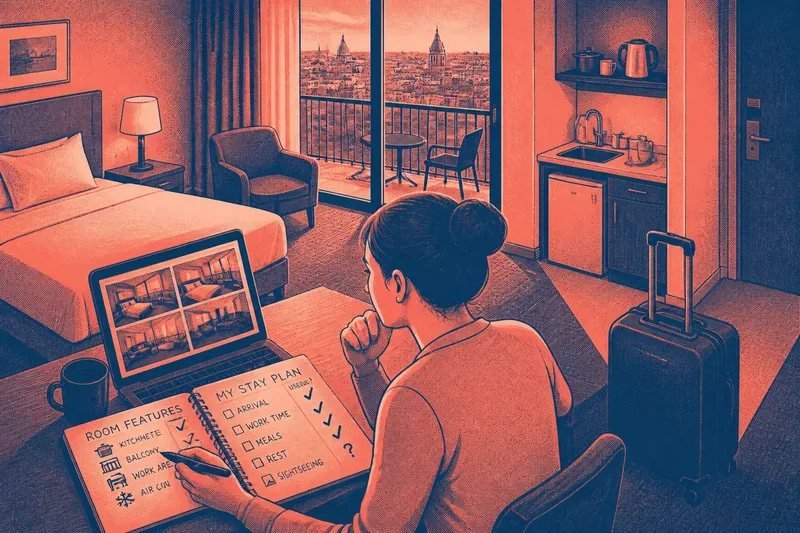
Room features without context can make a hotel listing look more useful than it is. A balcony, kitchenette or “city view” matters only if it suits the way you will spend time there; the practical question is what that feature lets you do during this particular stay.
That shift in perspective is useful because accommodation descriptions are designed to present possibilities, not to predict your experience. A feature can be accurate and still be a poor fit. Read it as a clue, then connect it to your arrival, daily routine and priorities before treating it as a reason to book.
Room features without context need a purpose
Start with the stay you are actually planning. Are you arriving late and leaving early, spending afternoons in the room, travelling with a child, or hoping for a quiet place to work? Those plans give each listed feature a job to do.
A desk, for instance, may be helpful if you need to answer emails during a longer stay. If you expect to spend the day out and only return to sleep, it may matter less than a clear arrival arrangement or a room location that suits your rest. Neither choice is universally better: the useful one depends on the moments you need the room to support.
Try translating feature names into ordinary actions:
- Kitchenette: Could you prepare the breakfast or simple meal you have in mind, and is the equipment described?
- Balcony: Would you actually sit outside, or is outdoor space unlikely to fit your schedule?
- Air conditioning: Does your comfort depend on it, and does the listing say it is available in your room rather than only in shared areas?
- Work area: Is there a desk or suitable surface, and will the room otherwise meet your needs for working?
- View: Would the outlook add something to your stay, or would a different room detail matter more?
This is not a demand to investigate every item. It is a way to separate features that solve a real need from those that merely sound appealing. If a detail will not change what you do, how comfortable you feel or what you need to bring, it may not deserve much weight.
A feature label is not the same as a usable feature
Short labels leave room for interpretation. “Kitchenette” might mean a sink and a small fridge, while another room may include a hob and basic cookware. “Balcony” tells you that an outdoor area exists, but not necessarily whether it is private, furnished or suitable for lingering.
The same gap appears with beds, bathrooms and views. A listing may name a bed type without clarifying the arrangement in a family room; “ensuite” describes a bathroom relationship, not its layout. A view may face a street, courtyard or distant landmark, each of which can feel different in practice.
Look for the detail that turns a category into a usable picture. Room descriptions, amenity notes and photographs can help, but photographs may show a representative room rather than the exact one offered. If one feature affects a central need, ask the accommodation a concise question before booking rather than relying on an attractive image or an ambiguous label.
Say you are planning a short stay with an early start and see “breakfast facilities” in a room description. That phrase could mean a kettle and mugs, or a more complete arrangement. If you only need tea before leaving, the kettle may be enough; if you are counting on preparing food, ask what equipment is actually provided and decide whether to make another plan.
Match room details to the rhythm of your stay
Features become easier to judge when you place them on a rough timeline. Think through arrival, the first hour in the room, the start of the day and the time you expect to return. This often reveals which details are practical and which are attractive extras.
For a late arrival, access instructions and the reception arrangement may matter more than a lounge area you will barely use. For a stay with a rest period in the afternoon, natural light, seating or a quiet-facing room could shape your comfort. For a trip built around meals out, a kitchenette may add little; for a stay where you expect to eat simple food in, it could be central.
Consider dependencies as well as features. A kitchenette is more useful if nearby shops suit your plans. A balcony matters less if you are likely to be away during the hours you would enjoy it. A workspace may not help much if you also need a calm setting for calls and the listing gives no indication of the room’s position or sound conditions.
These links do not mean you need to predict every detail of a trip. They simply keep one attractive feature from standing in for the whole room. If plans are uncertain, favour the basic conditions you already know you need, and treat more specialised amenities as possible bonuses.
Compare the whole room, not the longest amenity list
When comparing rooms, resist counting features as if each one had equal value. One room might list a balcony, a coffee machine and a decorative view, while another offers a layout that better supports your sleep and morning routine. The longer list does not make the first room the better match.
A useful comparison has three parts:
- Essential: A condition that affects whether the stay works for you, such as a suitable sleeping arrangement or access that fits your arrival.
- Helpful: A feature that makes a planned activity easier, such as a proper desk for a day of remote work.
- Optional: A pleasant extra that would be welcome but would not change your plans.
Give each detail one role, rather than letting the same benefit appear several times in your reasoning. For example, a coffee machine and a kettle may both support a simple morning drink; unless you need both for different reasons, treat them as overlapping conveniences. This keeps a listing’s wording from making small variations feel like major differences.
Pay attention to what is not described, too, but do not assume silence means a problem. If a room’s sleeping arrangement, bathroom access or an amenity you rely on is unclear, ask. For less important omissions, decide whether you can comfortably do without the feature rather than turning every uncertainty into a research task.
Questions to ask before booking?
Does “kitchenette” mean I can cook?
Not necessarily: the label may cover a limited set-up, and equipment can vary between rooms. Ask which appliances and utensils are in the specific room if preparing food is part of your plan.
Does a balcony mean the room has a private outdoor space?
The description may not explain privacy, furnishings or access clearly. Check the room details or ask whether the balcony is attached to and reserved for that room.
Can I rely on the room feature shown in a photograph?
A photograph can illustrate the style or a room category without depicting the exact room assigned to you. If a pictured feature is essential, confirm that it applies to the room type and booking you are considering.
What should I do if a feature is unclear?
Ask one direct question that names the feature and the practical need behind it. If the answer remains vague, decide whether you can adapt without it or compare another room whose description is clearer.
Keep the decision focused on what you will use
There is no need to scrutinise every cushion, appliance and photograph. That level of effort is rarely useful when a detail would not affect your stay. Focus instead on the few features tied to a real need, and spend any follow-up questions on those.
Before booking, write down the room conditions you genuinely depend on, then check whether the listing describes them specifically. Separate those from useful extras and nice-to-have details. This small distinction makes a room comparison clearer without asking you to plan every hour of the trip.
Room features without context are not meaningless; they are incomplete. Once you connect each one to a real moment in your plans, a long amenity list becomes a more honest guide to whether the room will suit you.